
SayGM vs TenTags API & AI generate
Comprehensive feature analysis, ratings breakdown, platform compatibility, and community review comparison.
Detailed Feature Comparison Matrix
Compare Other Tools| Dimension |  SayGM | 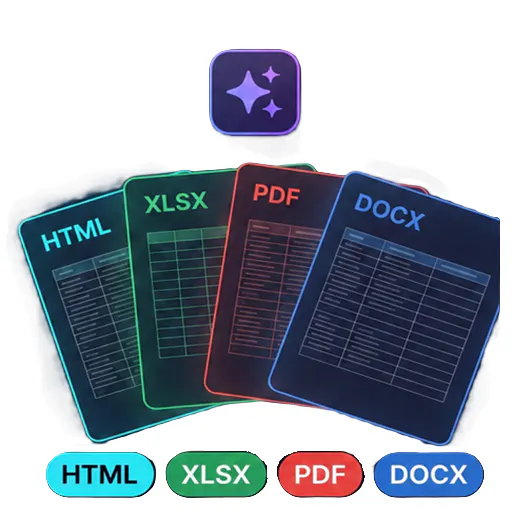 TenTags API & AI generate |
|---|---|---|
| Primary Category | API | API |
| Community Rating | No ratings(0 reviews) | No ratings(0 reviews) |
| Community Upvotes | 5 votes | 5 votes |
| Supported Platforms | Web | Web |
| Tags & Focus | #Artificial Intelligence#Developer Tools#API | #Artificial Intelligence#Developer Tools#API |
| Maker / Company | Independent Developer | Independent Developer |
| Platform Verification | Community Listing | Community Listing |
About SayGM
SayGM is a developer-focused, cost-effective, and highly private alternative to platforms like OpenRouter. Designed to bridge the gap between unified model access and strict data privacy, SayGM offers a single OpenAI-compatible endpoint that allows you to seamlessly access major frontier models—including Claude, GPT, and Gemini—without requiring code rewrites.
While many AI providers rely on basic text guarantees on their privacy pages, SayGM proves its privacy claims cryptographically. The gateway operates inside an Intel TDX enclave, enabling the silicon chip itself to sign a measurement verifying the exact software running. For open models, execution happens entirely within the secure enclave to ensure no one intercepts your prompts. For closed models, data remains strictly sealed for the maker alone, giving developers unmatched transparency and security in their AI infrastructure.
Pros of SayGM
- One unified, OpenAI-compatible endpoint for Claude, GPT, and Gemini with no code rewrites needed
- Provable privacy running inside an Intel TDX enclave with hardware-signed measurements
- Acts as a cheaper, secure alternative to OpenRouter
- Open models run securely inside the enclave to prevent prompt visibility by third parties
Cons of SayGM
- Specific pricing tiers and cost breakdowns are not explicitly detailed in the provided metadata
- Limited to the model families explicitly supported by the gateway API
Frequently Asked Questions
What is SayGM?
SayGM is a private and cost-effective alternative to OpenRouter that provides a single OpenAI-compatible endpoint to access models like Claude, GPT, and Gemini.
How does SayGM ensure data privacy?
SayGM's gateway runs inside an Intel TDX enclave. The physical chip itself signs a measurement of the exact software running, ensuring open models execute securely without third parties seeing your prompts, while closed models stay sealed for the maker alone.
Do I need to rewrite my code to use SayGM?
No. SayGM provides an OpenAI-compatible endpoint, allowing you to access Claude, GPT, and Gemini without performing code rewrites.
About TenTags API & AI generate
TenTags API & AI generate is an API-first document generation tool designed to streamline how developers and teams create structured files. By leveraging declarative Style/Data CSV templates, TenTags allows users to transform templates into HTML, PDF, XLSX, or DOCX files through a single authenticated endpoint.
Built for developer efficiency, the platform features a web playground where you can easily build and preview your templates before deploying them. Once ready, you can remotely generate documents from any backend system or via the command line interface (CLI), making it a flexible solution for modern software workflows.
Pros of TenTags API & AI generate
- API-first approach allows remote document generation from any backend or CLI
- Supports multiple popular output formats including HTML, PDF, XLSX, and DOCX
- Declarative Style/Data CSV templates simplify the document layout process
- Includes a web playground to build and preview templates in real time
Cons of TenTags API & AI generate
- Requires familiarity with API integrations and backend development
- Relies on declarative Style/Data CSV templates which may require a learning curve
- Limited documentation/details outside of core template-to-document conversion features
Frequently Asked Questions
What output formats does TenTags API support?
TenTags API supports generating documents in HTML, PDF, XLSX, and DOCX formats.
How do you create and test documents?
You can build and preview your declarative Style/Data CSV templates using the web playground, and then generate the final documents remotely from any backend or CLI via a single authenticated endpoint.
Who is this tool built for?
TenTags is designed primarily as a developer tool for software engineers and teams needing programmatic, API-driven document generation.