
MCP-Billing vs TenTags API & AI generate
Comprehensive feature analysis, ratings breakdown, platform compatibility, and community review comparison.
MCP-Billing
OAuth 2.1 + usage-based Stripe billing for MCP servers
Detailed Feature Comparison Matrix
Compare Other Tools| Dimension | MCP-Billing | 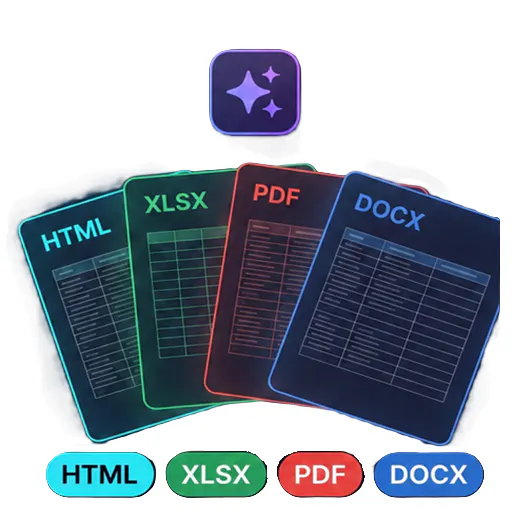 TenTags API & AI generate |
|---|---|---|
| Primary Category | API | API |
| Community Rating | No ratings(0 reviews) | No ratings(0 reviews) |
| Community Upvotes | 117 votes | 5 votes |
| Supported Platforms | Web | Web |
| Tags & Focus | #Developer Tools#SaaS#GitHub#API | #Artificial Intelligence#Developer Tools#API |
| Maker / Company | Independent Developer | Independent Developer |
| Platform Verification | Community Listing | Community Listing |
About MCP-Billing
MCP-Billing is a comprehensive, self-hosted Next.js and TypeScript boilerplate designed specifically for Model Context Protocol (MCP) servers. Built by Marc Gil, it bridges the gap between AI infrastructure and monetization by providing robust, production-ready backend modules.
The platform delivers everything developers need to commercialize their MCP servers, featuring full OAuth 2.1 + PKCE authorization, secure API key management with zero-downtime rotation, usage-based Stripe billing, and Redis rate limiting. Comprising 7 modular units and backed by over 300 tests, it ensures reliability and scalability.
Unlike closed ecosystems or platforms that take a cut of your revenue, MCP-Billing operates on a simple one-time purchase model with no ongoing revenue share or platform lock-in. Furthermore, its underlying metering core is free and open-source on npm, making it a flexible, developer-first solution for API and AI infrastructure monetization.
Pros of MCP-Billing
- Full OAuth 2.1 + PKCE support for secure authentication
- Usage-based Stripe billing integration out-of-the-box
- API key management featuring zero-downtime rotation
- Includes Redis rate limiting and 300+ tests across 7 modules
- One-time purchase fee with no revenue share or platform lock-in
Cons of MCP-Billing
- Self-hosted setup requires technical configuration and infrastructure management
- Limited to Next.js and TypeScript stack environments as a boilerplate
- Requires separate configuration and accounts for Stripe integration
Frequently Asked Questions
What is MCP-Billing?
MCP-Billing is a self-hosted Next.js and TypeScript boilerplate that equips MCP servers with OAuth 2.1 + PKCE authentication, API key management, Redis rate limiting, and usage-based Stripe billing.
How much does MCP-Billing cost?
MCP-Billing is available for a one-time fee of €79 with no revenue share or platform lock-in. Additionally, the metering core is free and open source on npm.
What technologies are used to build MCP-Billing?
It is built as a Next.js and TypeScript boilerplate, incorporating Redis for rate limiting, OAuth 2.1 for authentication, and Stripe for usage-based billing.
About TenTags API & AI generate
TenTags API & AI generate is an API-first document generation tool designed to streamline how developers and teams create structured files. By leveraging declarative Style/Data CSV templates, TenTags allows users to transform templates into HTML, PDF, XLSX, or DOCX files through a single authenticated endpoint.
Built for developer efficiency, the platform features a web playground where you can easily build and preview your templates before deploying them. Once ready, you can remotely generate documents from any backend system or via the command line interface (CLI), making it a flexible solution for modern software workflows.
Pros of TenTags API & AI generate
- API-first approach allows remote document generation from any backend or CLI
- Supports multiple popular output formats including HTML, PDF, XLSX, and DOCX
- Declarative Style/Data CSV templates simplify the document layout process
- Includes a web playground to build and preview templates in real time
Cons of TenTags API & AI generate
- Requires familiarity with API integrations and backend development
- Relies on declarative Style/Data CSV templates which may require a learning curve
- Limited documentation/details outside of core template-to-document conversion features
Frequently Asked Questions
What output formats does TenTags API support?
TenTags API supports generating documents in HTML, PDF, XLSX, and DOCX formats.
How do you create and test documents?
You can build and preview your declarative Style/Data CSV templates using the web playground, and then generate the final documents remotely from any backend or CLI via a single authenticated endpoint.
Who is this tool built for?
TenTags is designed primarily as a developer tool for software engineers and teams needing programmatic, API-driven document generation.